
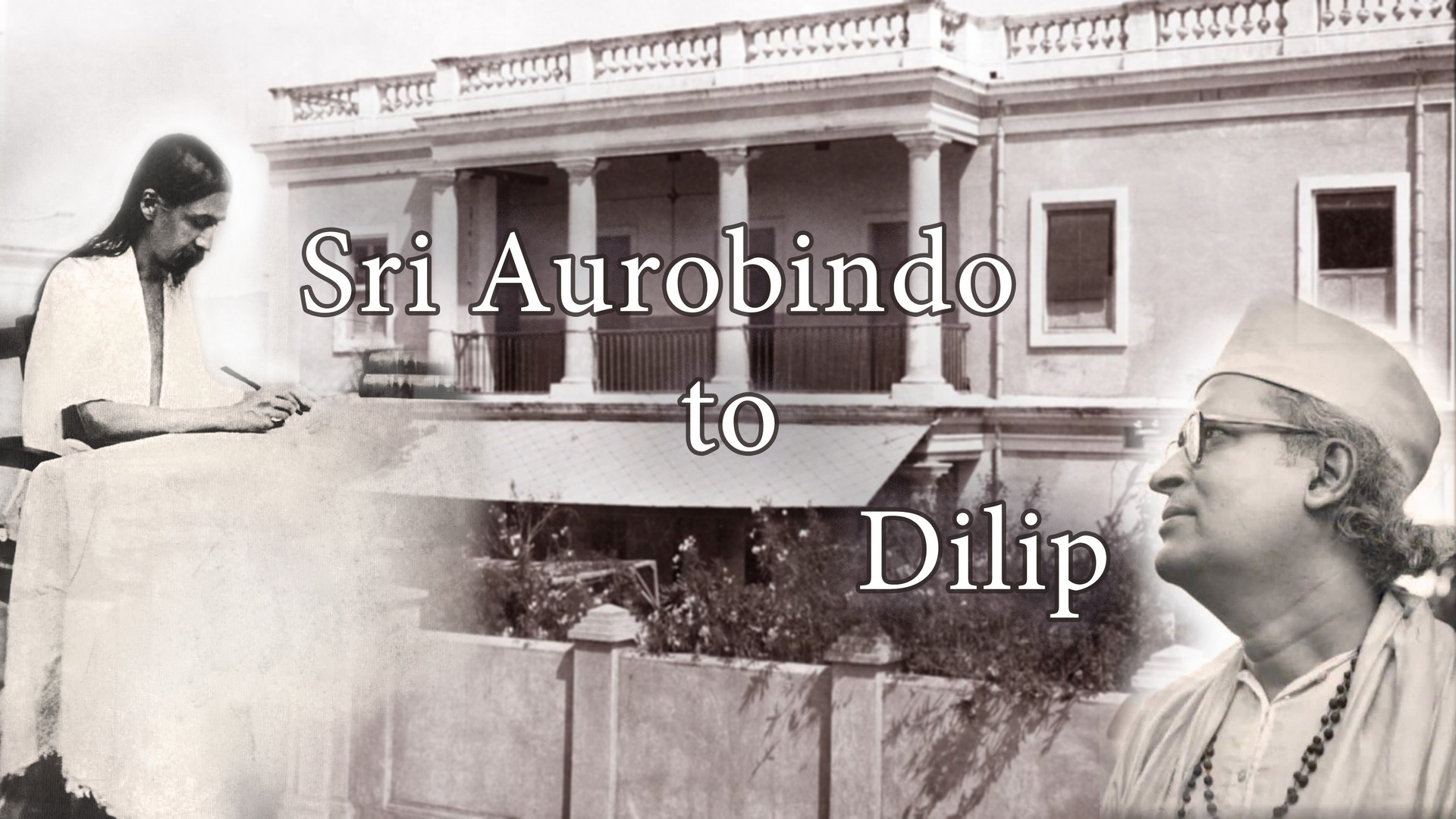
September 6, 1934
I agree with most of what Krishnaprem says, though one or two things I would put from a different angle. Your reasonings about faith and doubt have been of a rather extravagant kind because they come to this that one must either doubt everything or believe everything however absurd that anybody says. I have repeatedly told you that there is not only room for discrimination in Yoga, but a need for it at every step — otherwise you will get lost in the jungle of things that are not spiritual — as for instance the tangle of what I call the intermediate zone. I have also told you that you are not asked to believe everything told you by anybody and that there is no call to put faith in all the miraculous things narrated about Bejoy Krishna or another. That, I have said, is a question not of faith but of mental belief — and faith is not mental belief in outward facts but an intuition of the inner being about spiritual things. Krishnaprem means the same thing when he says that faith is the light sent down by the higher to the lower personality. As for the epithet “blind” used by Ramakrishna, it means as I said, not ignorantly credulous, but untroubled by the questionings of the intellect and unshaken by outward appearances of fact, e.g. one has faith in the Divine even though the fact seems to be that the world here or at least the human world is driven by undivine forces. One has faith in the Guru even when he uses methods that your intellect cannot grasp or affirms things as true of which you have yet no experience (for if his knowledge and experience are not greater than yours, why did you choose him as a guru?). One has faith in the Path leading to the goal even when the goal is very far off and the way covered by mist and cloud and smitten repeatedly by the thunderbolt. And so on. Even in worldly things man can do nothing great if he has not faith — in the spiritual realm it is still more indispensable. But this faith depends not on ignorant credulity, but on a light that burns inside though not seen by the eyes of the outward mind, a knowledge within that has not yet taken the form of an outer knowledge.
One thing however — I make a distinction between doubt and discrimination. If doubt meant a discriminative questioning as to what might be truth of this or that matter, it would be a part of discrimination and quite admissible; but what is usually meant now by doubt is a negation [positive?] and peremptory which does not stop to investigate, to consider in the light, to try, to enquire, but says at once, “Oh, no, I am never going to take that as possibly true.” That kind of doubt may be very useful in ordinary life, it may be practically useful in battering down established things or established ideas or certain kinds of external controversy to undermine a position that is too dogmatically positive; but I don’t think it is of any positive use in matters even of intellectual inquiry. There is nothing it can do there that impartial discrimination cannot do much better. In spiritual matters discrimination has a huge place, but negating doubt simply stops the path to Truth with its placard “No entry” or its dogmatic “Thus far and no farther.”
As for the intellect it is indispensable to man up to a certain point; after that it becomes an inferior instrument and often misleading and obstructive. It is what I meant when I wrote “Reason was the helper, reason is the bar.”[1] Intellect has done many things for man; it has helped to raise him high above the animals, at its best it has opened a first view on all great fields of knowledge. But it cannot go beyond that; it cannot get at Truth itself, only at some reflections, forms, representations of it — I myself cannot remember to have ever arrived at anything in the spiritual field by the power of the intellect — I have used it only to help the expression of what I have known and experienced, but even there it is only certain forms that it provided, they were used by another Light and a larger Mind than the intellect. When the intellect tried to decide things in this field, it always delayed matters. I suppose what it can do sometimes is to stir up the mind, plough it or prepare — but the knowledge comes only when one gets another higher than intellectual opening. Even in Mind itself there are things higher than the intellect, ranges of activity that exceed it. Spiritual knowledge is easier to these than to the reasoning intelligence.
* * *
September 7, 1934
The faith is there, not in your mind, not in your vital, but in your psychic being. It was this faith that flung you out of the world and brought you to Pondicherry; it is this faith that keeps you to what the soul wills and refuses to go back on what it has decided. Even the mind’s questionings have been a groping after some justification by which it can get an excuse for believing in spite of its difficulties. The vital’s eagerness and its Vairagya are shadows of this faith, forms which it has taken in order to keep the vital from giving up in spite of the pressure of despondency and struggle. Even in the mind and vital of the man of strongest mental and vital faith there are periods when the knowledge in the psychic gets covered up — but it persists behind the veil. In you the eclipse has been strong and long because owing to certain mental and vital formations, the assent of the mind and vital got clouded over and could only take negative forms. But there is always the knowledge or intuition in the soul that started you on the way. I have been pressing on you the need of faith because the assent has again to take a positive form so as to give free way to the Divine Force; but the persistent drive in the soul (which is a hidden and externally suppressed faith) is itself sufficient to warrant the expectation of the Grace to come.
* * *
September 11, 1934
I have said that the most decisive way for the Peace or the Silence to come is by a descent from above. In fact, in reality though not always in appearance, that is how they always come; — not in appearance always, because the sadhak is not always conscious of the process; he feels the peace settling in him or at least manifesting, but he has not been conscious how and whence it came. Yet it is the truth that all that belongs to the higher consciousness comes from above, not only the spiritual peace and silence, but the Light, the Power, the Knowledge, the higher seeing and thought, the Ananda come from above. It is also possible that up to a certain point they may come from within, but this is because the psychic being is open to them directly and they come first there and then reveal themselves in the rest of the being from the psychic or by its coming into the front. A disclosure from within or a descent from above, these are the two sovereign ways of the Yoga-siddhi. An effort of the external surface mind or emotions, a Tapasya of some kind may seem to build up some of these things, but the results are usually uncertain and fragmentary, compared to the result of the two radical ways. That is why in this Yoga we insist always on an “opening” — an opening inwards of the inner mind, vital, physical to the inmost part of us, the psychic, and an opening upwards to what is above the mind — as indispensable for the fruits of the sadhana.
The underlying reason for this is that this little mind, vital and body which we call ourselves is only a surface movement and not our “self” at all. It is an external bit of personality put forward for one brief life, for the play of the Ignorance. It is equipped with an ignorant mind stumbling about in search of fragments of truth, an ignorant vital rushing about in search of fragments of pleasure, an obscure and mostly subconscious physical receiving the impacts of things and suffering rather than possessing a resultant pain or pleasure. All that is accepted until the mind gets disgusted and starts looking about for the real Truth of itself and things, the vital gets disgusted and begins wondering whether there is not such a thing as real bliss and the physical gets tired and wants liberation from itself and its pains and pleasures. Then it is possible for the little ignorant bit of personality to get back to its real Self and with it to these greater things — or else to extinction of itself, Nirvana.
The real Self is not anywhere on the surface but deep within and above. Within is the soul supporting an inner mind, inner vital, inner physical in which there is a capacity for universal wideness and with it for the things now asked for — direct contact with the truth of self and things, taste of a universal bliss, liberation from the imprisoned smallness and sufferings of the gross physical body. Even in Europe the existence of something behind the surface is now very frequently admitted, but its nature is mistaken and it is called subconscient or subliminal, while really it is very conscious in its own way and not subliminal but only behind the veil. It is, according to our psychology, connected with the small outer personality by certain centres of consciousness of which we become aware by Yoga. Only a little of the inner being escapes through these centres into the outer life, but that little is the best part of ourselves and responsible for our art, poetry, philosophy, ideals, religious aspirations, efforts at knowledge and perfection. But the inner centres are for the most part closed or asleep — to open them and make them awake and active is one aim of Yoga. As they open, the powers and possibilities of the inner being also are aroused in us; we awake first to a larger consciousness and then to a cosmic consciousness; we are no longer little separate personalities with limited lives but centres of a universal action and in direct contact with cosmic forces. Moreover, instead of being unwilling playthings of the latter, as is the surface person, we can become to a certain extent conscious and masters of the play of nature — how far this goes depending on the development of the inner being and its opening upward to the higher spiritual levels. At the same time the opening of the heart centre releases the psychic being which proceeds to make us aware of the Divine within us and of the higher Truth above us.
For the highest spiritual Self is not even behind our personality and bodily existence but is above it and altogether exceeds it. The highest of the inner centres is in the head, just as the deepest is the heart; but the centre which opens directly to the Self is above the head, altogether outside the physical body, in what is called the subtle body, sūkṣma śarīra. This Self has two aspects and the results of realising it correspond to these two aspects. One is static, a condition of wide peace, freedom, silence: the silent Self is unaffected by any action or experience; it impartially supports them but does not seem to originate them at all, rather to stand back detached or unconcerned, udāsīna. The other aspect is dynamic and that is experienced as a cosmic Self or Spirit which not only supports but originates and contains the whole cosmic action — not only that part of it which concerns our physical selves but also all that is beyond it — this world and all other worlds, the supraphysical as well as the physical ranges of the universe. Moreover, we feel the Self as one in all; but also we feel it as above all, transcendent, surpassing all individual birth or cosmic existence. To get into the universal Self — one in all — is to be liberated from ego; ego either becomes a small instrumental circumstance in the consciousness or even disappears from our consciousness altogether. That is the extinction or Nirvana of the ego. To get into the transcendent self above all makes us capable of transcending altogether even cosmic consciousness and action — it can be the way to that complete liberation from the world-existence which is called also extinction, laya [dissolution], moksha, Nirvana.
It must be noted however that the opening upward does not necessarily lead to peace, silence and Nirvana only. The sadhak becomes aware not only of a great, eventually an infinite peace, silence, wideness above us, above the head as it were and extending into all physical and supraphysical space, but also he can become aware of other things — a vast Force in which is all Power, a vast Light in which is all knowledge, a vast Ananda in which is all bliss and rapture. At first they appear as something essential, indeterminate, absolute, simple, kevala: a Nirvana into any of these things seems possible. But we can come to see too that this Force contains all forces, this Light all lights, this Ananda all joy and bliss possible. And all this can descend into us. Any of them and all of them can come down, not peace alone; only the safest is to bring down first an absolute calm and peace, for that makes the descent of the rest more secure; otherwise it may be difficult for the external nature to contain or bear so much Force, Light, Knowledge or Ananda. All these things together make what we call the higher spiritual or Divine Consciousness. The psychic opening through the heart puts us primarily into connection with the individual Divine, the Divine in his inner relation with us; it is especially the source of love and bhakti. This upward opening puts us into direct relation with the whole Divine and can create in us the divine consciousness and a new birth or births of the spirit.
When the Peace is established, this higher or Divine Force from above can descend and work in us. It descends usually first into the head and liberates the inner mind centres, then into the heart centre and liberates fully the psychic and emotional being, then into the navel and other vital centres and liberates the inner vital, then into the Muladhara and below and liberates the inner physical being. It works at the same time for perfection as well as liberation; it takes up the whole nature part by part and deals with it, rejecting what has to be rejected, sublimating what has to be sublimated, creating what has to be created. It integrates, harmonises, establishes a new rhythm in the nature. It can bring down too a higher and yet higher force and range of the higher nature until, if that be the aim of the sadhana, it becomes possible to bring down the supramental force and existence. All this is prepared, assisted, farthered by the work of the psychic being in the heart centre; the more it is open, in front, active, the quicker, safer, easier the working of the Force can be. The more love and bhakti and surrender grow in the heart, the more rapid and perfect becomes the evolution of the sadhana. For the descent and transformation imply at the same time an increasing contact and union with the Divine.
That is the fundamental rationale of this sadhana. It will be evident that the two most important things here are the opening of the heart centre and the opening of the mind centres to all that is behind and above them. For the heart opens to the psychic being and the mind centres open to the higher consciousness and the nexus between the psychic being and the higher consciousness is the principal means of the siddhi. The first opening is effected by a concentration in the heart, a call to the Divine to manifest within us and through the psychic to take up and lead the whole nature. Aspiration, prayer, bhakti, love, surrender are the main supports of this part of the sadhana — accompanied by a rejection of all that stands in the way of what we aspire for. The second opening is effected by a concentration of the consciousness in the head (afterwards, above it) and an aspiration and call and a sustained will for the descent of the divine Peace, Power, Light, Knowledge, Ananda into the being — the Peace first or the Peace and Force together. Some indeed receive Light first or Ananda first or some sudden pouring down of Knowledge. With some there is first an opening which reveals to them a vast infinite Silence, Force, Light or Bliss above them and afterwards either they ascend to that or these things begin to descend into the lower nature. With others there is either the descent, first into the head, then down to the heart level, then to the navel and below and through the whole body, or else an inexplicable opening — without any sense of descent — of peace, light, wideness or power, or else a horizontal opening into the cosmic consciousness or in a suddenly widened mind an outburst of knowledge. Whatever comes has to be welcomed — for there is no absolute rule for all — but if the peace has not come first, care must be taken not to swell oneself in exultation or lose the balance. The capital movement however is when the Divine Force or Shakti, the power of the Mother comes down and takes hold, for then the organisation of the consciousness begins and the larger foundation of the Yoga.
The result of the concentration is not usually immediate — though to some there comes a swift and sudden outflowering; but with most there is a time longer or shorter of adaptation or preparation, especially if the nature has not been prepared already to some extent by aspiration and Tapasya. The coming of the result can sometimes be aided by associating with the concentration one of the processes of the old Yoga. There is the Adwaita process of the way of knowledge — one rejects from oneself the identification with the mind, vital, body, saying continually “I am not the mind,” “I am not the vital,” “I am not the body,” seeing these things as separate from one’s real self — and after a time one feels all the mental, vital, physical processes and the very sense of mind, vital, body becoming externalised, an outer action, while within and detached from them there grows the sense of a separate self-existent being which opens into the realisation of the cosmic and transcendent spirit. There is also the method — a very powerful method — of the Sankhyas, the separation of the Purusha and the Prakriti. One enforces on the mind the position of the Witness — all action of mind, vital, physical becomes an outer play which is not myself or mine, but belongs to Nature and has been enforced on an outer me. I am the witness Purusha; I am silent, detached, not bound by any of these things. There grows up in consequence a division in the being; the sadhak feels within him the growth of a calm silent separate consciousness which feels itself quite apart from the surface play of the mind and the vital and physical Nature. Usually when this takes place, it is possible very rapidly to bring down the peace of the higher consciousness and the action of the higher Force and the full march of the Yoga. But often the Force itself comes down first in response to the concentration and call and then, if these things are necessary, it does them and uses any other means or process that is helpful or indispensable.
One thing more. In this process of the descent from above and the working it is most important not to rely entirely on oneself, but to rely on the guidance of the Mother and myself and to refer all that happens to us. For it often happens that the forces of the lower nature are stimulated and excited by the descent and want to mix with it and turn it to their profit. If there is the assent of the sadhak to the Divine working alone and the submission or surrender to the guidance, then all can go smoothly. This assent and a rejection of all egoistic forces or forces that appeal to the ego are the safeguard throughout the sadhana. This is the reason why in this Yoga we insist so much on what we call Samarpaṇa — rather inadequately rendered by the English word surrender. If the heart centre is fully opened and the psychic is in control, then there is no question; all is safe. But the psychic can at any moment be veiled by a lower upsurge. It is only a few who are exempt from these dangers and it is precisely those to whom surrender is easily possible. The guidance of one who himself is by identity or represents the divine is in this difficult endeavour imperative and indispensable.
In suggesting to you to concentrate in the head and heart, I have really been asking you to take up this central method of the Yoga. What I have written may help you to get some clear idea of what I mean by this process. I have written at some length but, naturally, could cover only the fundamental things. Whatever belongs to circumstance and detail must arise as one works out the method or rather as it works itself out — for the last is what usually happens when there is an effective beginning of the action of the sadhana.
* * *
[1] Thoughts and Glimpses.